In modern manufacturing, visual quality inspection is no longer optional—it is essential for maintaining consistency, reducing defects, and meeting global compliance standards. At the core of every machine vision inspection system is the industrial camera, and two types dominate these applications today: Area Scan Cameras and Line Scan Cameras. In this article, we give you a clear, overall understanding of both Line Scan Cameras and Area Scan Cameras, their differences, and where each one fits best. Understanding the difference between area scan vs line scan cameras is critical for choosing the right vision inspection camera for your production line, as each is designed for specific product behaviors, surface types, and line speeds. Selecting the right camera ensures higher accuracy, lower rejection rates, and faster ROI from your automated visual inspection system.
What is a Line Scan Camera?
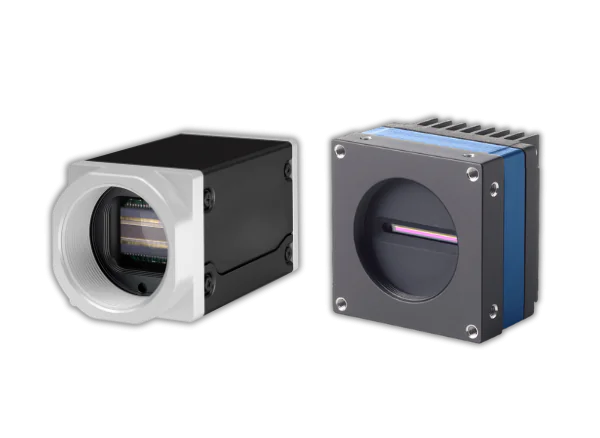
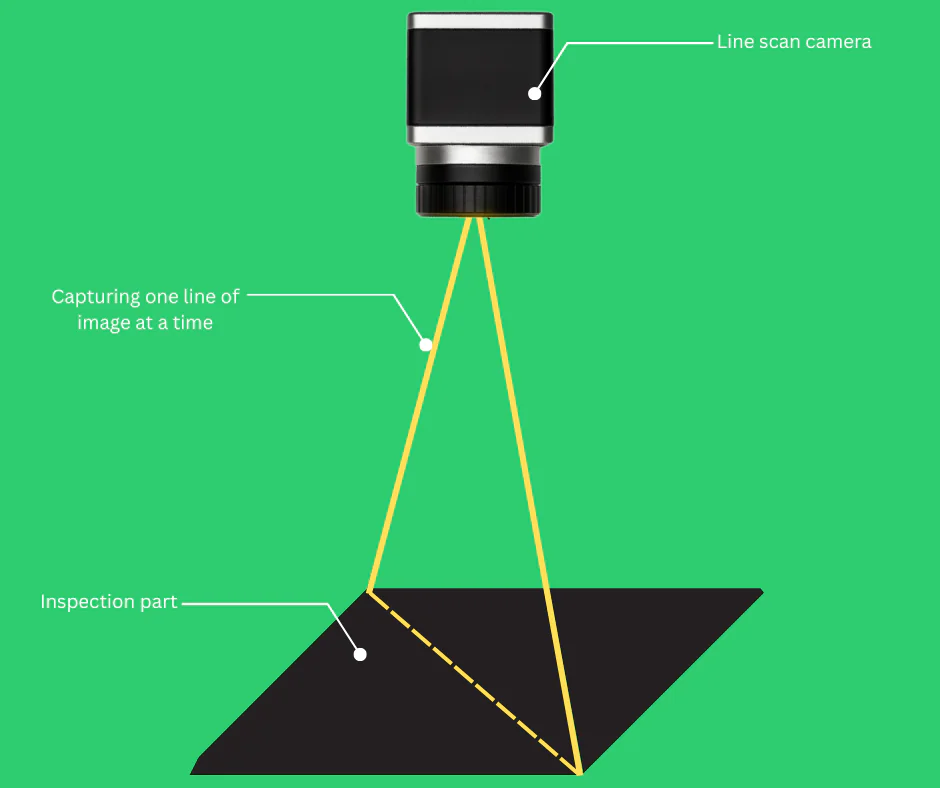
A Line Scan Camera is a high-speed inspection camera that captures images one line of pixels at a time, instead of capturing a full 2D image in a single frame. As the product moves continuously under the camera, each captured line is stitched together digitally to form a complete, ultra-high-resolution image.
Unlike traditional cameras, a line scan camera for inspection does not capture a full frame in one shot. Instead, it enables:
Continuous web inspection
Ultra-high-resolution surface inspection
Distortion-free 360-degree inspection of rotating objects
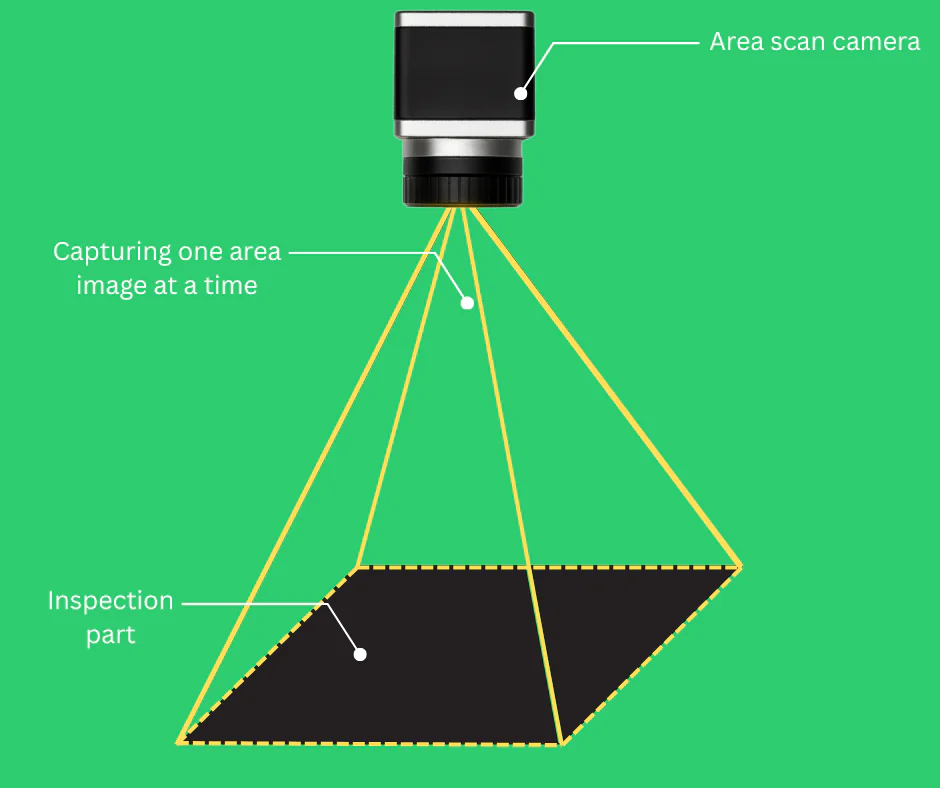
An Area Scan Camera captures the entire product in a single 2D image, similar to how a standard digital photograph is taken. This makes it the most commonly used vision inspection camera for manufacturing and automated visual inspection systems.
An area scan camera for inspection is best suited when:
The product fits within one field of view
The product is stationary or moves at a controlled speed
Inspection involves surface defects, printing, sealing, or presence checks
Due to its flexibility, the area scan camera in machine vision is used extensively in AI-based quality inspection systems like DeepInspect®.
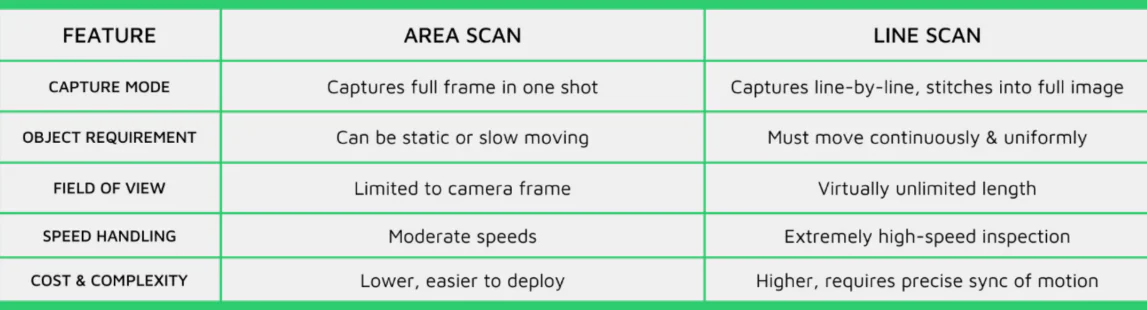
Key Difference- Area Scan Camera Vs Line Scan Camera
Once the Camera Is Chosen, Inspection Software Makes the Real Difference
While selecting the right Line Scan or Area Scan camera is essential for capturing the right images, the overall performance of a vision system is ultimately defined by the inspection software. The software determines how accurately defects are detected, how consistently results are repeated, how fast models adapt to change, and how stable the system remains in real production conditions. A capable visual inspection software ensures that variations in lighting, speed, and product appearance do not compromise inspection reliability—making it a critical pillar of any successful automation strategy.
DeepInspect® - Best AI-Powered Visual Quality Inspection Software for Line Scan & Area Scan Applications
Requires only 200 good images for AI model training
Model training completed in under 45 minutes
Line trial is achievable within 1 day
Delivers 99.5% inspection accuracy
Maintains false positives below 0.5%
Proven performance across both Line Scan and Area Scan camera systems
Conclusion
Both Area Scan and Line Scan Cameras play a critical role in modern industrial vision systems, each serving different inspection needs based on product type, movement, surface size, and production speed. While Area Scan Cameras are ideal for discrete, frame-based inspection, Line Scan Cameras enable continuous, high-speed, and large-surface inspection with extreme precision. Choosing the right camera is essential—but choosing the right AI inspection software is what truly determines inspection success. With just 200 good images for training, model training in under 45 minutes, a one-day line trial, 99.5% inspection accuracy, and false positives below 0.5%, DeepInspect® stands out as the most reliable, fastest-to-deploy, and production-ready AI-powered visual quality inspection software for both Line Scan and Area Scan camera systems. This makes DeepInspect® the ideal choice for manufacturers looking to achieve stable, scalable, and high-accuracy visual inspection across any production environment.
Curious to Know More? Book a Free Line Demo
Inquiry Form
What is the difference between a line scan camera and an area scan camera?
A line scan camera captures images one line at a time and is ideal for continuous, fast-moving, or long surfaces, while an area scan camera captures a complete 2D image in a single frame and is best for discrete, stationary, or moderately moving products.
Which is better for industrial inspection: line scan or area scan camera?
The right choice depends on your product type, line speed, surface size, and inspection requirements. Area scan is ideal for most general inspections, while line scan is essential for continuous and high-speed applications.
What are the common applications of line scan cameras in manufacturing?
Line scan cameras are widely used for aluminium foil inspection, paper and film inspection, textile inspection, metal strip inspection, and 360-degree inspection of rotating products.
What are the common applications of area scan cameras in manufacturing?
Area scan cameras are commonly used for bottle inspection, cap and tube inspection, label and barcode inspection, OCR/OCV, PCB inspection, blister pack inspection, and surface defect detection.
How do I choose between a line scan camera and an area scan camera for my production line?
Choose an area scan camera if your product fits in one frame and moves slowly. Choose a line scan camera if your product moves continuously, is very long, or requires ultra-high resolution across its surface.
Why is software important in a line scan or area scan inspection system?
While the camera captures images, the visual inspection software determines detection accuracy, repeatability, speed, and system stability. The right software ensures reliable inspection even under changing production conditions.