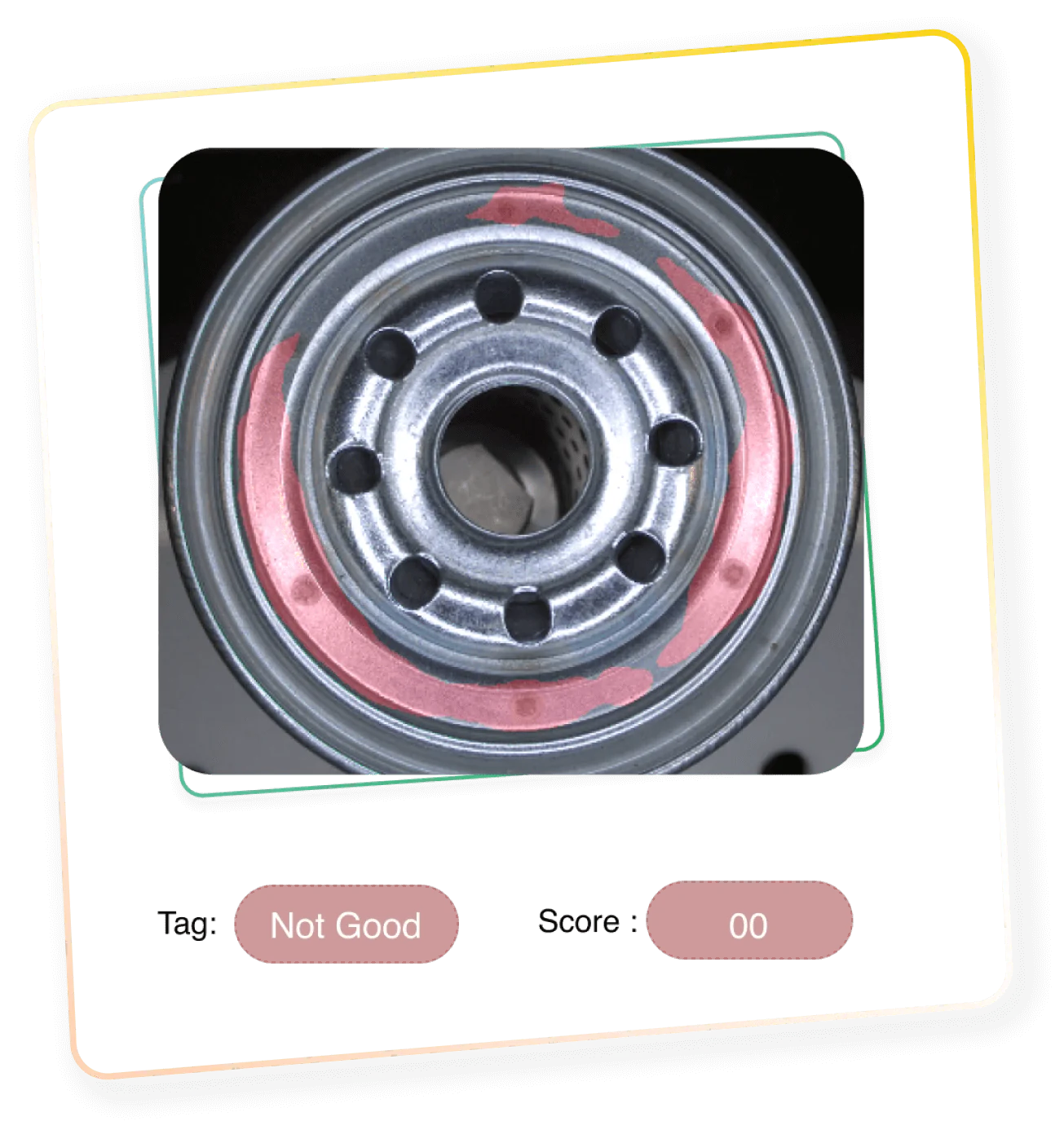
Enhancing Oil Filter Quality Inspection with DeepInspect
Related Articles
Enhancing Oil Filter Quality Inspection with DeepInspect
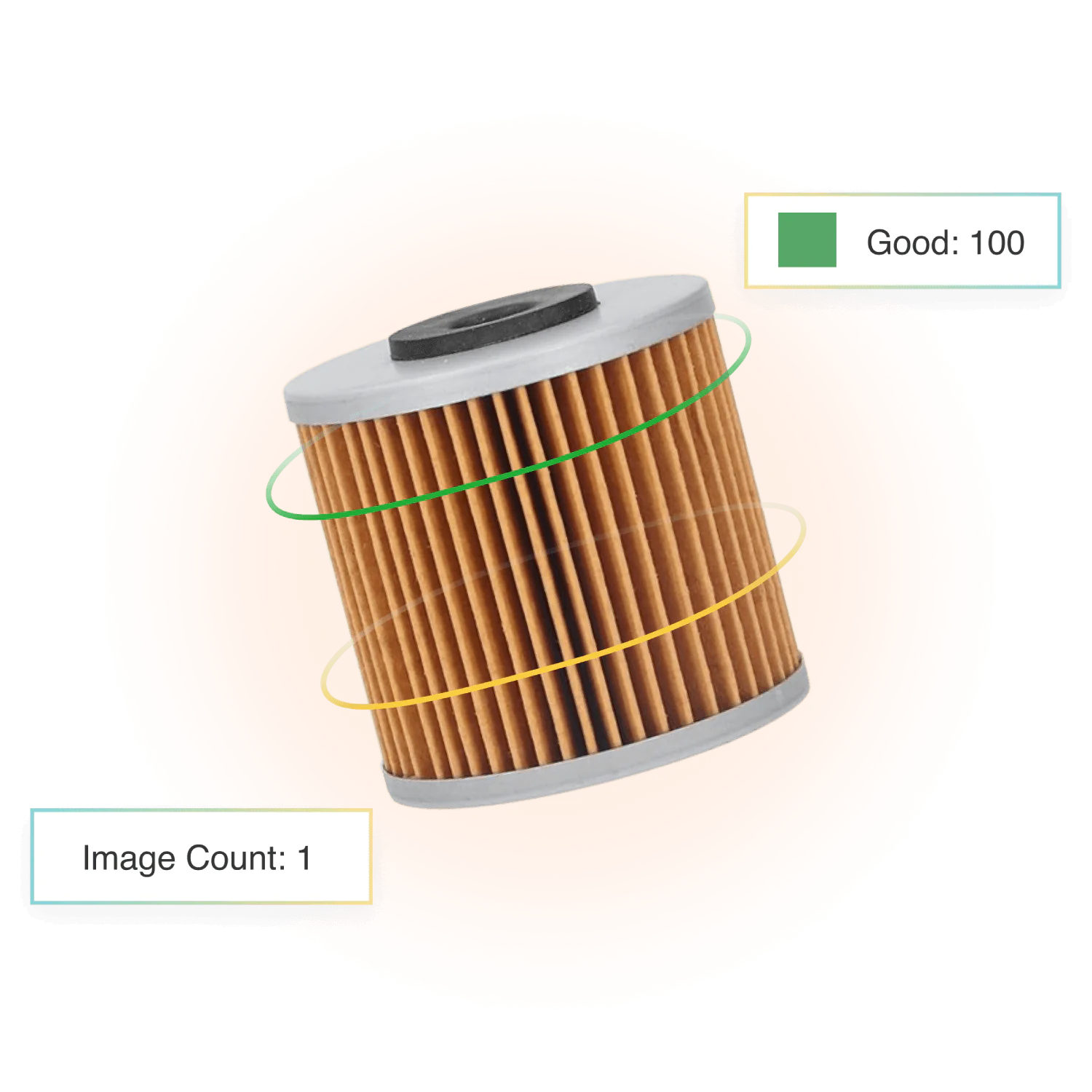
Defects in oil filters can severely compromise vehicle performance and engine reliability. Issues such as dents, cuts, improper sealing, missing threads, or damaged casings not only reduce efficiency but also increase the risk of long-term damage to vehicle engines. For automotive manufacturers, ensuring defect-free oil filters is critical for delivering quality and performance.
Defects in Oil Filters and the Risks They Pose
Defective oil filters pose significant risks to engines, leading to contamination, performance degradation, and potential failure. Here are the primary challenges caused by common oil filter defects:
Insufficient Lubrication:
Dents in oil filters can reduce structural integrity and hinder proper oil flow, causing lower oil pressure and compromised filtration. This increases the risk of contamination, leading to poor engine lubrication, decreased performance, and potential long-term damage.
Wear of Engine Components:
Defective filters fail to capture abrasive particles effectively, leaving contaminants in the oil. These particles accelerate wear on critical engine components like camshafts, lifters, and valves, shortening their lifespan and increasing maintenance costs.
Engine Overheating:
Contaminants and poor lubrication from defective filters increase friction within the engine. This generates excess heat, potentially causing overheating, warped components, and gasket failures.
Contamination Risks:
Cuts, improper sealing, and damaged casings can allow oil leaks and contamination, jeopardizing engine functionality and performance. This poses significant reliability and safety issues.
DeepInspect- AI powered Quality Inspection Software for Oil Filter Manufacturers:
SwitchOn DeepInspect® offers a cutting-edge solution for identifying and addressing defects in oil filters. The system ensures unmatched accuracy and efficiency, helping manufacturers produce defect-free filters. The DeepInspect AI model stands out with its remarkable efficiency, requiring less than 200 high-quality images for model training, compared to the thousands of images typically needed by traditional AI systems. This streamlined approach allows the model to be trained in under 45 minutes. The system can be seamlessly deployed on the production line within just a few days, enabling manufacturers to quickly enhance quality control processes and improve operational efficiency.
How Does AI Powered Oil Filter Inspection Using Deep Inspect Works?
The DeepInspect® system sets a new standard for defect detection, offering comprehensive 360-degree coverage to ensure unparalleled inspection accuracy. For a complete 360-degree view of the oil filter, the system can be equipped with four industrial cameras (customizable based on specific requirements) strategically positioned around the production line to inspect the sides of each product. Additionally, a top-mounted camera is included to thoroughly examine the top surface of the filter. This advanced configuration ensures every angle is meticulously inspected, leaving no defect undetected.
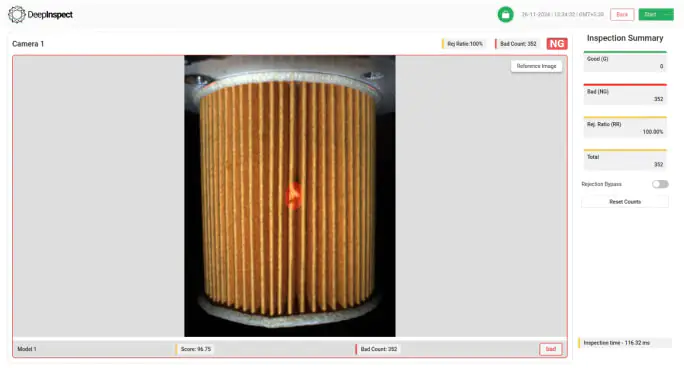
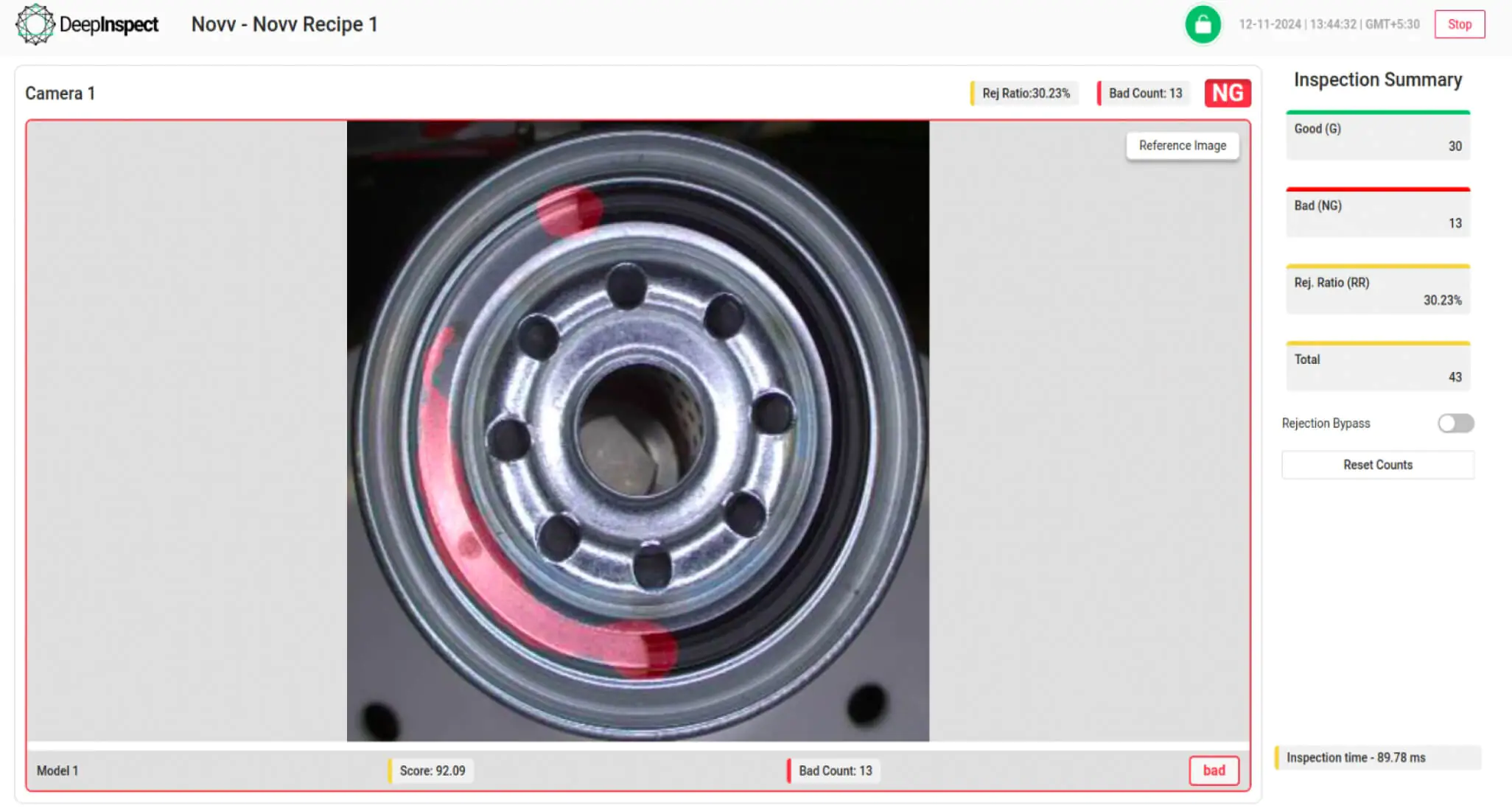
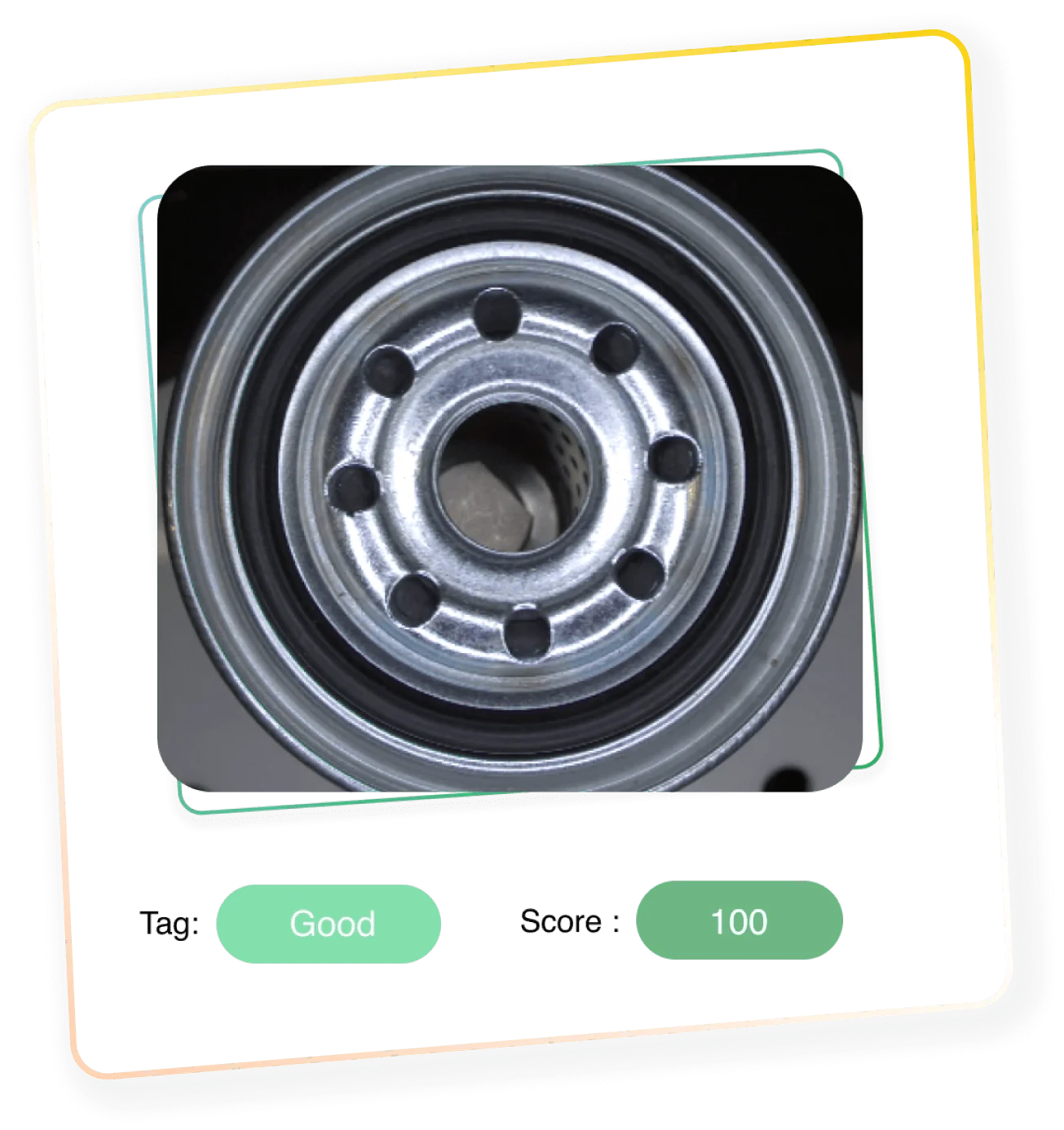
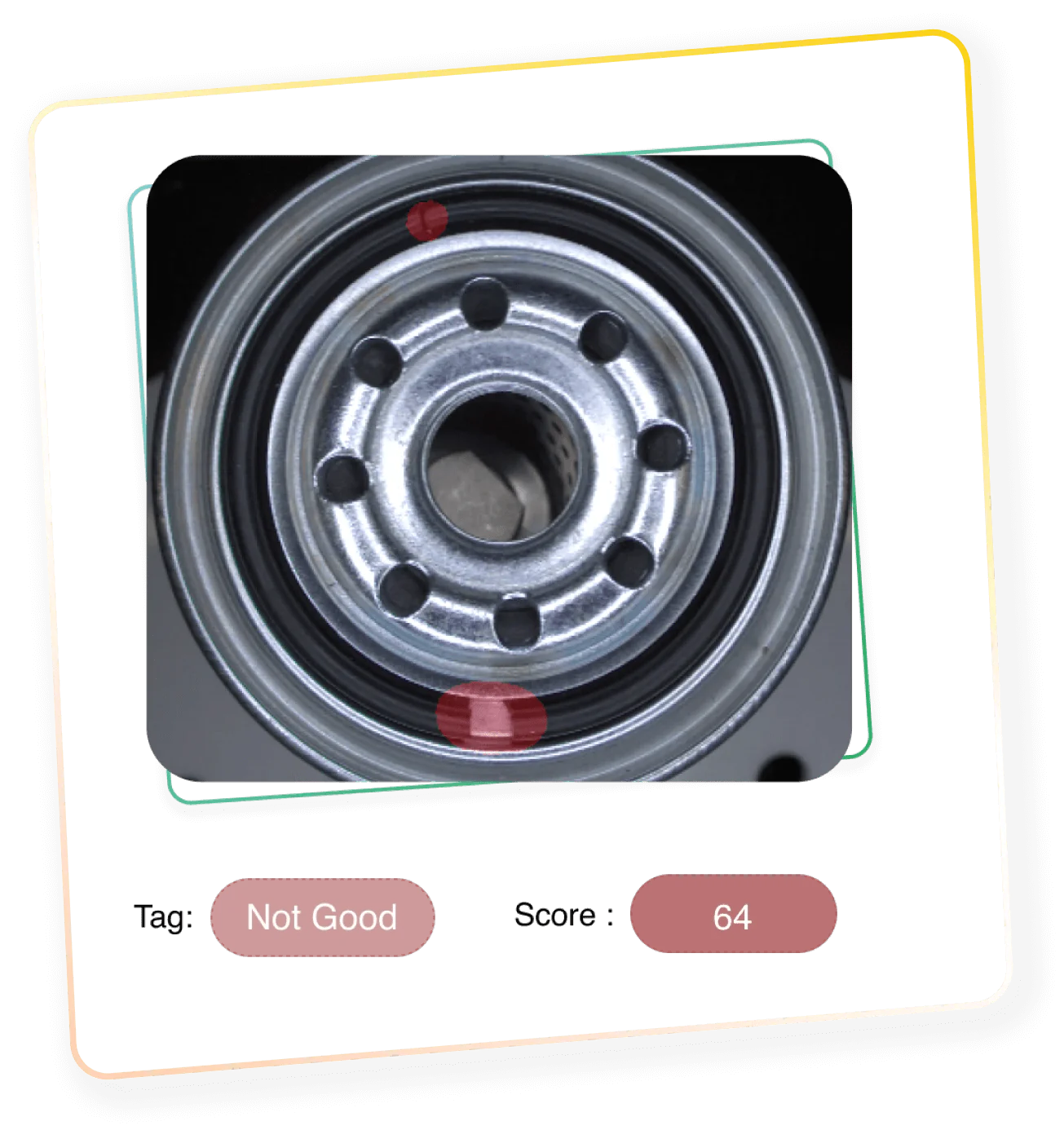
As the oil filters move along the conveyor, the DeepInspect® system activates its cameras to capture real-time images of each product. These images are then analyzed and compared against the pre-trained AI model, allowing the system to identify defects with an impressive 99.5% accuracy and a false positive rate below 0.5%. Any defective parts are immediately removed from the production line using an automated rejection mechanism, ensuring only flawless products continue to the next stage.
Conclusion:
The DeepInspect® system transforms oil filter quality control with an impressive 99.5% accuracy and less than 0.5% false positives. By ensuring flawless products, it helps manufacturers boost production efficiency, reduce errors, and deliver reliable, high-quality filters that enhance engine performance and meet the highest manufacturing standards.
Let's Discuss How We Can Transform Your Operations!
FAQ’s :
DeepInspect uses readily available industrial-grade hardware to ensure high repeatability and long lifespan. We provide a basic kit to help you get started, which includes a controller, camera, lights, and a PLC.
DeepInspect supports inspection speeds of up to 1000 parts per minute. The final speed depends on various factors, such as the number of cameras, lighting, and other line conditions. If you have a requirement above 1000 PPM, please contact us.
DeepInspect supports all GenICam-compliant USB 3.0 and GigE cameras, giving you the flexibility to work with the hardware you already have on your production line. Fully tested and compatible brands include Basler, IDS, Baumer, Omron Sentech, Allied Vision, FLIR, HIK Robot, and Lucid Vision. We also support Area Scan, Line Scan, and Thermal cameras, covering a wide range of inspection environments and product types.
DeepInspect is built specifically for defects that are random and unpredictable in nature, such as cracks, scratches, surface anomalies, missing components, seal failures, and label errors. Unlike rule-based systems that rely on a defect appearing at a fixed location or in a fixed pattern, DeepInspect uses AI models trained on your actual production data to recognize defects regardless of where they appear or how they look. This is exactly where AI inspection becomes critical: when a crack can appear anywhere on a part, or a scratch has no consistent shape or size, traditional vision systems fail. DeepInspect is trained to catch what others miss. The system has been successfully deployed across over 1,000 unique SKUs in automotive, pharma, electronics, and FMCG industries.

Curious to Learn More?
Download the full use case below!