Closure Cap Inspection using AI and Machine Vision

Crown cap visual inspection

AI powered Closure inspection at 1000 PPM

Visual quality inspection for closures, such as bottle caps, presents several significant challenges. These include their complex shapes, continuous rotation during production, and high operational speeds, typically exceeding 1000 parts per minute (PPM). These factors make it difficult to identify defects with traditional inspection methods, which can lead to quality control issues and increased wastage.

Optimal Placement of Closure Inspection Systems

To ensure the highest quality of closures, it is crucial to strategically place inspection systems in the production process. There are two key locations for optimal placement:

  • At the Manufacturing Source

Installing inspection systems at the manufacturing stage ensures that closures are defect-free before they leave the production line. This proactive approach prevents defective caps from impacting filling machines and reduces wastage. By catching defects early, manufacturers can avoid the costly repercussions of defective closures in subsequent stages of production and packaging.

  • Post-Filling Station

Inspection systems at the post-filling stage monitor automated or manual capping operations. Any issues with the capping machines can lead to damaged closures, improper sealing, spillage, and product returns. By inspecting closures after they are placed on bottles, manufacturers can ensure that any defects introduced during capping are detected and addressed before products reach consumers.

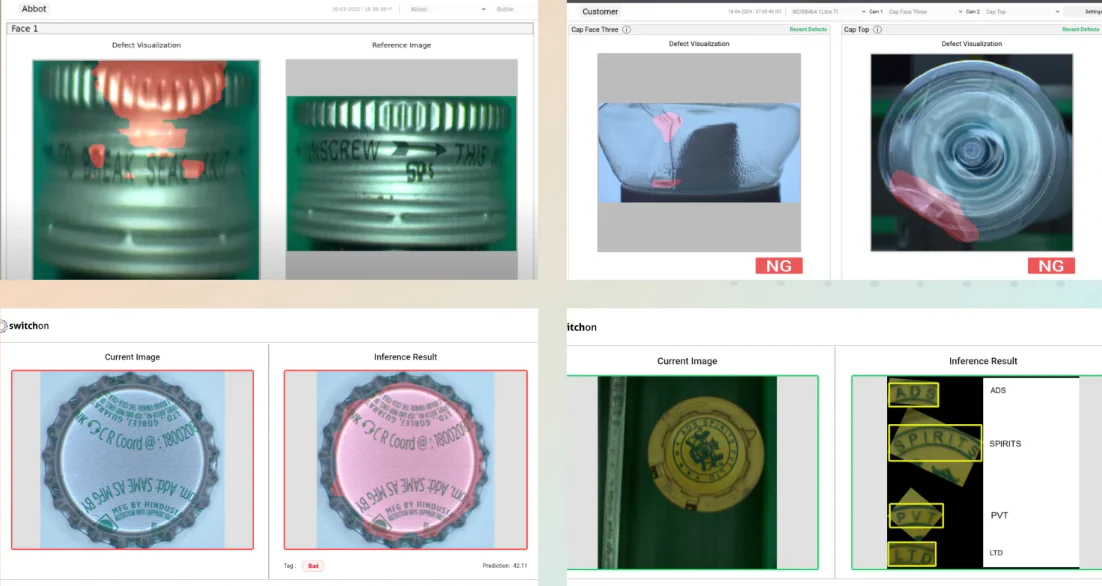
DeepInspect’s AI-powered surface inspection tools provide complete defect coverage with high speed, accuracy, and minimum false-positives(wastage).

What can you do only with DeepInspect

different parameters of visual inspection

System Hardware Specifications

  • DeepInspect Pro Software

  • High-speed 1.6MP+ Basler Industrial camera

  • Mitsubishi High speed PLC

  • Controller with i5 and Nvidia GPU

  • High-speed pneumatic-based rejection system with 5 ms response time

Integration with Manufacturing Lines

DeepInspect can be seamlessly integrated or retrofitted into existing production lines or Special Purpose Machines (SPM). The integration process is typically non-intrusive and does not interfere with the product flow. If necessary, DeepInspect’s system integrators can also develop new SPMs with built-in inspection capabilities, ensuring a tailored solution for any manufacturing setup.

Used by Global FMCG and Beverage Companies

Global F&B and CPG Majors have successfully integrated DeepInspect to enhance their closure manufacturing and post-filling capping operations.  Optimize your closure quality control with DeepInspect’s advanced visual inspection systems and ensure top-notch product standards throughout your manufacturing and packaging processes.

Let's Discuss How We Can Transform Your Operations!

FAQ’s :

What hardware is required for DeepInspect? Do we provide hardware?

DeepInspect uses readily available industrial-grade hardware to ensure high repeatability and long lifespan. We provide a basic kit to help you get started, which includes a controller, camera, lights, and a PLC.

What speeds does DeepInspect support?

DeepInspect supports inspection speeds of up to 1000 parts per minute. The final speed depends on various factors, such as the number of cameras, lighting, and other line conditions. If you have a requirement above 1000 PPM, please contact us.

What cameras do we support?

DeepInspect supports all GenICam-compliant USB 3.0 and GigE cameras, giving you the flexibility to work with the hardware you already have on your production line. Fully tested and compatible brands include Basler, IDS, Baumer, Omron Sentech, Allied Vision, FLIR, HIK Robot, and Lucid Vision. We also support Area Scan, Line Scan, and Thermal cameras, covering a wide range of inspection environments and product types.

What kind of defects can DeepInspect capture?

DeepInspect is built specifically for defects that are random and unpredictable in nature, such as cracks, scratches, surface anomalies, missing components, seal failures, and label errors. Unlike rule-based systems that rely on a defect appearing at a fixed location or in a fixed pattern, DeepInspect uses AI models trained on your actual production data to recognize defects regardless of where they appear or how they look. This is exactly where AI inspection becomes critical: when a crack can appear anywhere on a part, or a scratch has no consistent shape or size, traditional vision systems fail. DeepInspect is trained to catch what others miss. The system has been successfully deployed across over 1,000 unique SKUs in automotive, pharma, electronics, and FMCG industries.